Solve Problems Fast. Get Results Faster. Try Kaizen.
Solve Problems Fast. Get Results Faster. Try Kaizen.
Some teams work inside slow, frustrating, error-ridden processes that drain time, money, energy, and ultimately impact customers.
Good: We take on process improvement efforts to fix these problems.
Bad: We often give team members 6-9-12 months to solve problems and implement changes. These problems are happening NOW, so why do we accept waiting months for results?
Better: There’s a proven method that helps teams solve problems fast—and create measurable results in days, not months. It’s called
kaizen.
Kaizen is a focused, high‑energy, team‑driven method for rapidly improving a process — not in six months, not in three months, but in one week. Instead of long meetings, slow decisions, and endless analysis, kaizen brings the right people together to work through a problem and implement solutions to create immediate benefits and outcomes.
Kaizen improvement projects are fast-paced, team-building, energizing, fun – and they create improvements that teams own and sustain.
Why Kaizen Works
Kaizen accelerates improvement because it blends structured problem solving, team engagement, and hands‑on testing into a short, powerful burst of activity (agile like). Teams end with a better process, defined roles and responsibilities, written standardized work instructions, measurable results, and a mechanism to continue improving. This is improvement for people who want — and need — results now.
Kaizen is ideal for high‑priority processes where delays, rework, or inefficiencies are holding you back. Organizations and teams use kaizen to improve ANY work process. Kaizen can help when: 1. if team members are frustrated, avoiding the work, or working around the process, 2. costs are too high, 3. lead times too long, 4. work is not correct and complete the 1st time, 5. customers are not delighted, or 6. growth is needed.
Most improvement efforts stall because they rely on numerous meetings, slow decision making, and unclear ownership. Kaizen flips that approach.
Kaizen delivers:
- Results: Faster processes, reduced waste, improved quality, and better outcomes
- Confidence: Teams leave energized and ready for more improvements
- Speed: All steps of the improvement cycle (PDSA / DMAIC) completed in one week
- Engagement: High team involvement, pride, and ownership
- Clarity: A new process, roles, responsibilities, standard operating procedures, performance measures, and training materials
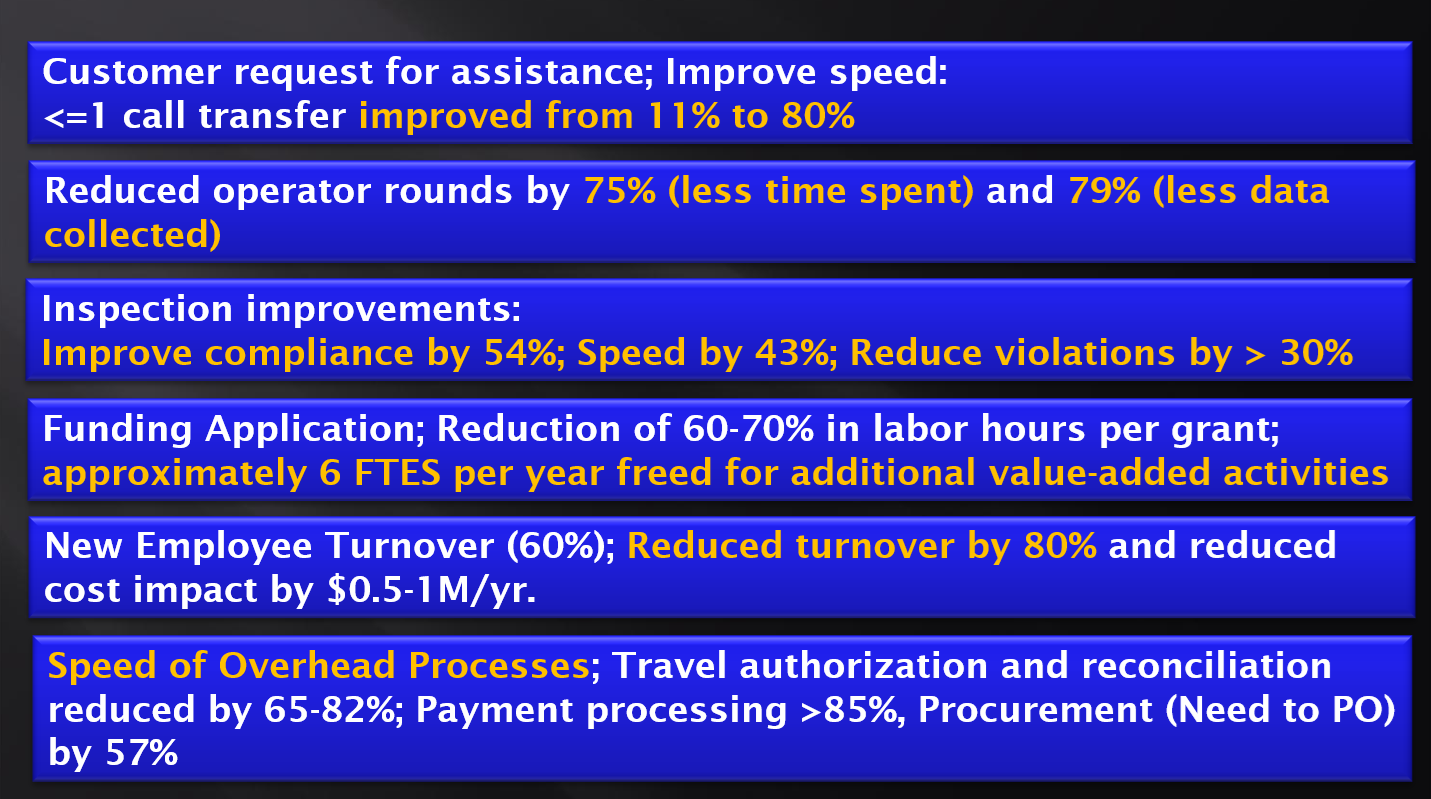
See a few examples of improved processes with team-created results:
How Kaizen Works
Often in 1 week or 5 days spread over a few weeks, teams will:
- Establish goal, measures of success, and specific process scope
- Understand the current process
- Identify priority wastes, issues, and root causes
- Identify, develop, test solutions
- Implement changes with clear ownership, standardized work, training, and communications
- Celebrate progress and build momentum to make the changes stick
This isn’t theory. It’s real work on real problems—done quickly, collaboratively, and with measurable impact.
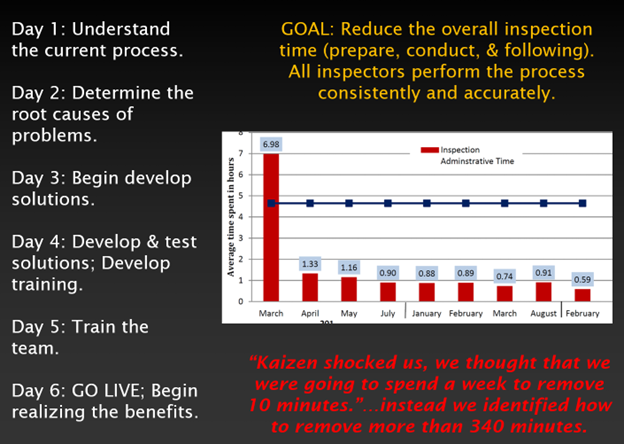
See the day by day approach and another example of team-created results. Process time decreased by 92%, from 6.98 hours to 0.59 hours per inspection. Wow, they were so happy to eliminate their backlog, more time to address nonconformances, learn and take on new types of inspections, and time to breathe and not get behind during a maternity leave.
Ready to Try Kaizen? Let’s Do It Together.
We’ve helped teams accelerate improvement using kaizen—achieving results faster, easier, with more engagement than traditional methods, and the skills to do it again. One kaizen event leader led twelve kaizen events in the year following training. The organization got hooked on achieving their goals and fixing problems rapidly!
Give kaizen a look if you want to:
- Solve priority problems (time, cost, quality, volume, engagement)
- Build team confidence and skills
- Create measurable results quickly
- Strengthen organization culture.
Kaizen doesn’t just solve problems. It builds momentum, confidence, and a culture of “we can do it and rapidly.”