System-wide Thinking and Acting
System-wide thinking helps you take a few steps back - to better see and understand your suppliers, your customers and outcomes, and what is done collectively to achieve those outcomes.. System-wide thinking involves mapping the entire process, organization, system, program, team, supply chain (from beginning to end) to SEE the over-arching opportunities to improve quality, cost, speed, and delivery. If you are fixing problems only to learn the root of the problem is outside your area or spending our time making one silo/area perfect and not seeing it results in better customer service/product/experiences. Applying system-wide thinking and action can help!
The Benefits: Why System-wide thinking and acting
- It will bring us, our customers, supporting departments, team members, partners, and suppliers together.
- A significant increase in understanding how we all work together, handoffs, expectations, and deliverables. Understand our work and how we impact others.
- It will increase innovation, focus, and collaboration. "That is what you do with what I give you? Why?" "Let's do this better!"
- A significant improvement in customer impact when everyone is aligned and focused on creating an effective and efficient system.
SUCCESS #1: Find the biggest barriers to make the biggest impact. Aka Theory of constraints
The team strived to improve their capacity by increasing # of customers visited/day. They put effort into improving the value-added step: the on-site inspection time with the customer. Two results were achieved 1. Improved quality interaction with customers 👍and 2. No change to their capacity and process times. 👎 You are reading correctly, they did not achieve their goal.
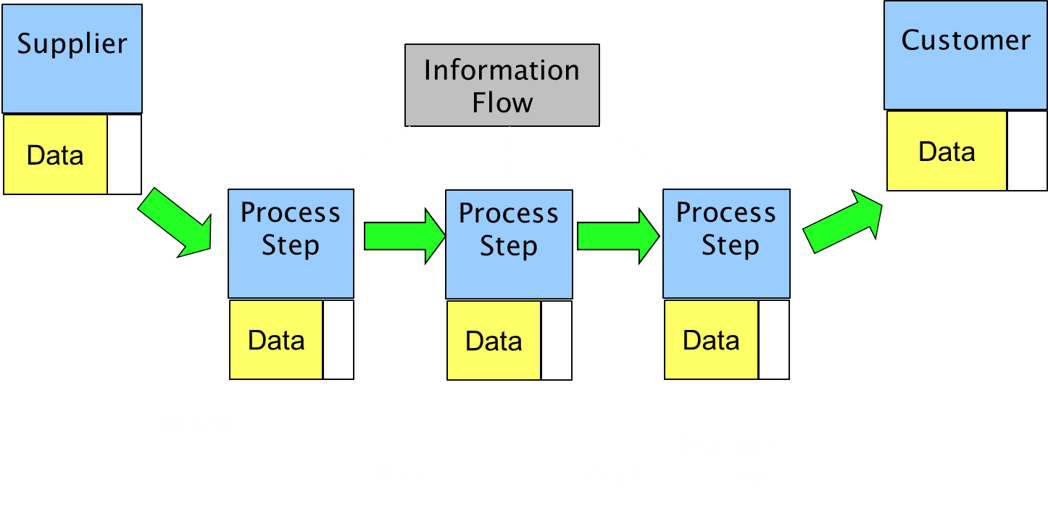
The next improvement (improvement is continual 😀), with system-wide thinking, they looked at their work from a higher and data-based view. A visual map, like the one below, helped answer these questions: What is the supplier input to their work? What are the work steps? What is customer output from their work? What are the gaps, delays, rejects, and rework?
The system-wide evaluation led them to travel time. More time was consumed in traveling between customers than on-site time. This led the team to identify and implement planning and scheduling strategies to decrease their work travel times, increase their visits per day, along with a happier team and customers!!
SUCCESS #2: Find the biggest barriers to make the biggest impact
The team was preparing to hire someone to help with their heavy work load. System-wide thinking helped them learn 90% of their input (from their suppler) was incorrect or incomplete. The biggest barrier was not in their process; it was in what they received! Their actions focused on working with their suppliers to improve quality of input. The results:
- Quality improved (90% to 10% defects) in one month.
- Working relations with suppliers improved, immediately.
- Team capacity increased. Hiring an additional team member was not needed.
System-wide thinking and action guides more understanding of work (from beginning to end; the supply chain) and how information and materials really flow to identify the most
impactful actions.
Interested in trying this too?