Accreditation & Certification Support
Achieving High Performance
Reaching high performance and building a strong organizational culture rarely happens in one step. It is a journey of many steps, lots of lessons learned, and intentional daily activities.
Industry accreditations and certifications (e.g., PHAB, ISO, Joint Commission, OSHA, FDA, CLIA, etc) help guide this journey. They provide structure, expectations, and practical activities that support consistent improvement and measurable progress.
Today, we highlight 6 practical activities that strengthen accreditation, certification, and the pursuit of high performance.
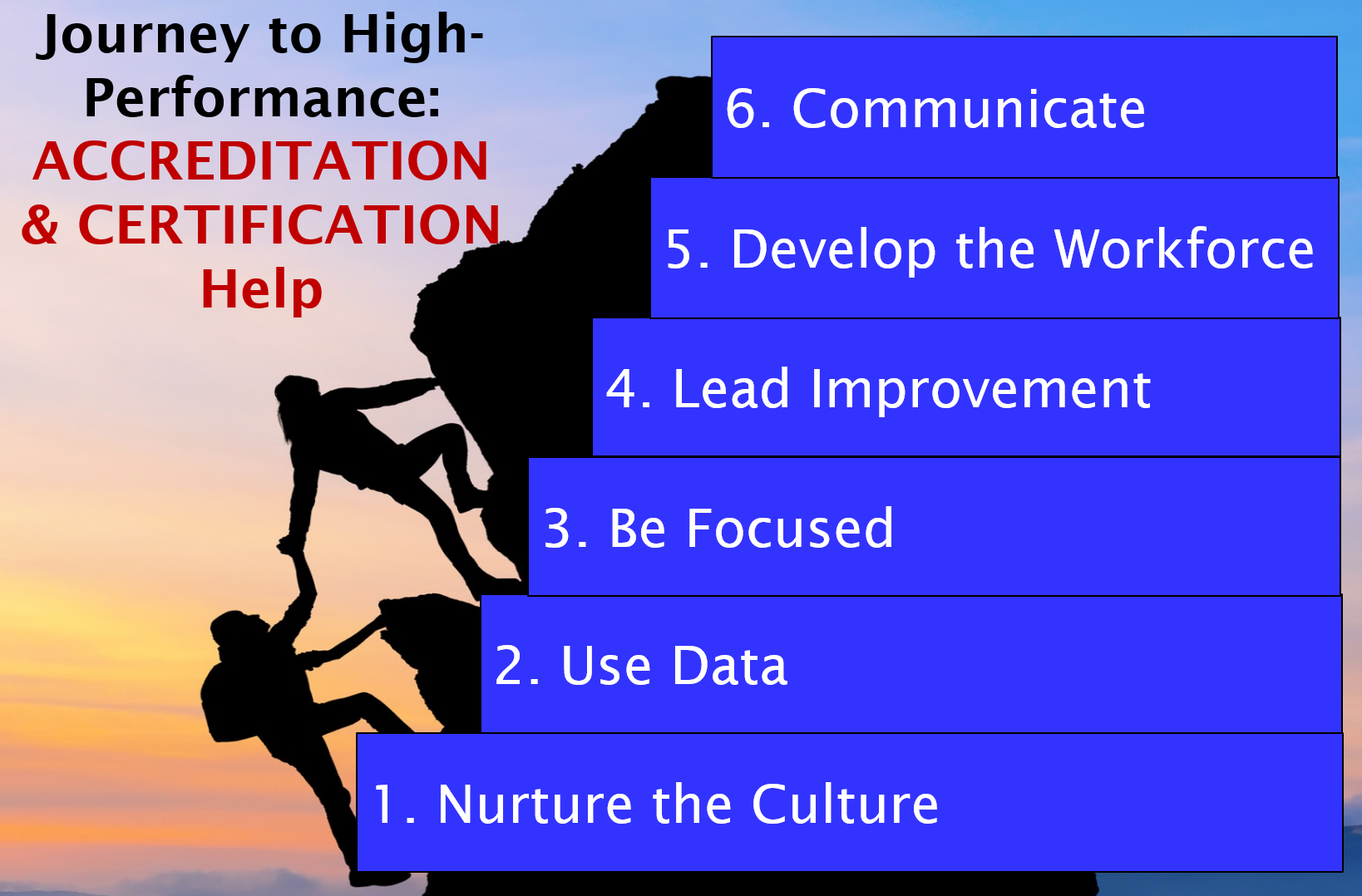
1. Nurture the Culture
- Bring our Mission, Vision, Values, and Strategies into daily life. Be a role model!
- Provide opportunities for everyone to feel comfortable raising problems and ideas every day and everywhere and act on what is shared!
- Build a learning step into daily work. Reflect during and after activities to make the future better.
2. Use Data - Trusted data makes decision making easier with less debates and disagreements.
- Performance management involves the interlocking of goals and cascading performance measures for the organization, departments, teams, and individuals. Provide everyone performance measures so they understand how they're doing and where improvement is needed. More resources
- Accreditation desires process and program evaluation. Capturing lessons learned is one way to evaluate performance. Another is to take a step back with a system-wide view to identify gaps and priority improvement areas.
3. Be Focused
- Setting long-term organization strategies (3-5 year Strategic Plan) is an accreditation/certification requirement in some industries. A strategic plan seeks to set organization focus and alignment to achieve desired outcomes.
- Routinely gather customer satisfaction and feedback to identify themes and improvement opportunities. More resources and a prioritization tool.
4. Lead Improvement
- Breaking down the strategic plans into an annual improvement plan helps keep everyone focused on outcomes and what to do to achieve outcomes. Additionally, an annual improvement plan confirms projects and activities are important and resourced. More resources
- Equip everyone with improvement methods and techniques to create improvements faster, easier, and better results.
- Some accreditations and certifications are interested in developing and/or adopting evidence based interventions (EBIs). Why - because they accelerate implementation and strengthen outcomes.
5. Develop the Workforce
- Our people are key to our organization's success. Provide development opportunities to grow and utilize everyone's potential. Core skills may be a good place to focus. If gaining knowledge and skills from outside partners, ask for continuing education units (CEUs) for team members.
6. Communication
- Communication aid alignment and engagement. Create a Communication and change plan and communications to stay focused, share progress and performance, and nurture the 'we're successful together' culture.
In closing, high performance is achieved through a journey of many intentional steps. Industry accreditations and certifications provide guidance to implement and document progress along the journey. There are many practical ways to make this culture of improvement real and meaningful, especially in the 6 areas provided above.